The Bureau of Labor Statistics estimates that each year nearly 70 to 75 workers are killed on the job by “backover” incidents—accidents that happen when a vehicle or piece of heavy machinery strikes a worker or object while reversing.
From 2018-2021, BLS found that 277 total U.S. worker deaths were caused by vehicle runovers/backovers. The National Safety Council (NSC) estimates that “backing-up” accidents overall (which includes off-duty and non-occupational incidents) cause approximately 500 deaths and 15,000 injuries per year across all scenarios.
The primary cause of these incidents is limited line-of-sight and severe blind spots behind heavy equipment and commercial trucks. Not surprisingly, the high-risk industries such as construction and roadway work zones are the most heavily impacted, with pedestrian workers facing the highest exposure to large, heavy equipment with blind spots.
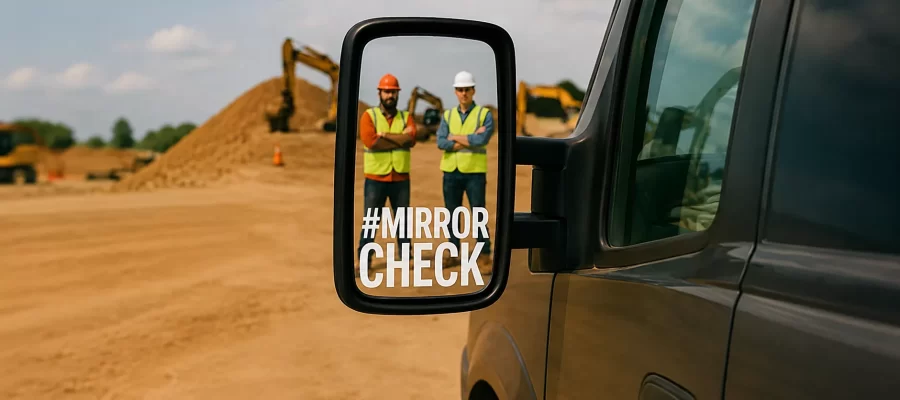
Backover incidents are preventable with the proper employee training and use of available tools and technologies. This May, OSHA launched its #MirrorCheck Initiative to raise awareness about this workplace hazard. As part of this effort, they are providing resources to help educate workers and employers to adopt safety practices and reduce risks.
The campaign promotes routine safety checks and hazard awareness for drivers and site operators. The initiative emphasizes several key practices and requirements to keep worksites safe:
- Pre-Operation Inspections: Encouraging operators to conduct thorough inspections before their shift, ensuring all mirrors, windows, and warning systems are clean, aligned, and functional.
• Proper Mirror Adjustment: Drivers must properly adjust mirrors to cover as much of the blind spots and danger zones around heavy machinery as possible before moving.
• Using Spotters: Utilizing trained ground spotters to guide drivers, relying on established hand signals and maintaining constant visual contact, particularly when equipment has complex blind spots.
• Enhanced Safety Technology: Promoting the use of manufacturer-installed safety tools, including rearview cameras, proximity detection systems (radar/ultrasonic), and audio-visual backup alarms.
• Internal Traffic Control Plans: Developing clear, strategic site plans that coordinate the movement of workers, vehicles, and heavy equipment to minimize overlap.
On their website, OSHA provides free educational materials, presentations, checklists, and resources that companies can integrate into their daily jobsite “toolbox talks”.