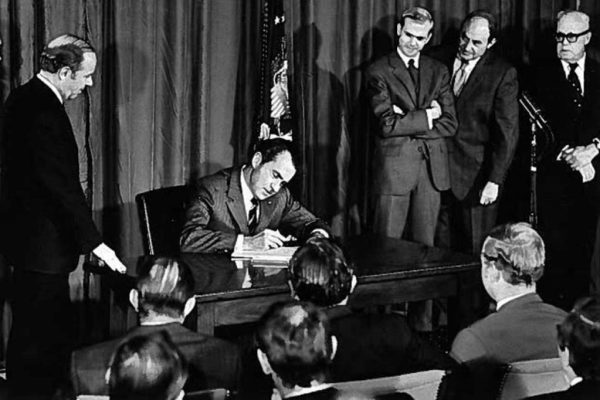
In 1970, President Nixon signed the Occupational Health and Safety Act which established OSHA within the Department of Labor. It was enacted on April 28, 1971, over 55 years ago.
Modern workplace safety has evolved—shifting from a reactive (post incident) compliance model to a proactive, technology-driven approach, dedicated to prevention. Today’s comprehensive body of federal regulations is heavily focused on environmental stressors, high hazard data transparency, and emerging biological and physical Worker Safety, evolved from lessons learned through fifty years of workplace tragedies.
Key historical catalysts include devastating fires and labor unrest, culminating in an agency fixed on accident prevention.
A timeline of key milestones in United States worker safety:
• 1908 – Passage of the Federal Employers Liability Act allowed injured railroad workers to seek damages. Congress also passed the first workers’ compensation law for federal civilian employees.
• 1911 – Triangle Shirtwaist Factory Fire: The tragic death of 146 garment workers in New York sparked national outrage. This led to state-level workers’ compensation laws and fundamental building, electrical, and fire safety codes.
• 1912 – National Safety Council (NSC) Founded: Established by industrial and transportation leaders to advance accident prevention and the preservation of human life.
• 1938 – Fair Labor Standards Act (FLSA) regulated minimum wage, overtime pay, andestablished federal standards for child labor, restricting the hours and types of jobsminors could perform.
• 1970 – OSH Act & Creation of OSHA: The Occupational Safety and Health Administrationwas established under the OSH Act, signing into law mandatory federal baseline safety and health standards for American workplaces.
• 1977 – Mine Safety Expansion: The Federal Mine Safety and Health Act created the Mine Safety and Health Administration (MSHA) within the Department of Labor to protect underground and surface miners.
• 1983 – Hazard Communication Standard: Introduced the “Right to Know” rule, requiring employers to disclose hazardous chemicals in the workplace and properly train workers to handle them safely.
• 2007 – Employer Payment for PPE: Enacted a rule legally requiring employers to provide workers with required Personal Protective Equipment (PPE) at no cost.
• 2009 – Globally Harmonized System (GHS): Adopted globally standardized criteria for hazard classification, labels, and Safety Data Sheets (SDS) to improve international worker comprehension.
• 2016 – Injury & Illness Tracking Rule: Required employers in high-hazard industries to electronically submit their workplace injury and illness data, increasing transparency and public reporting.