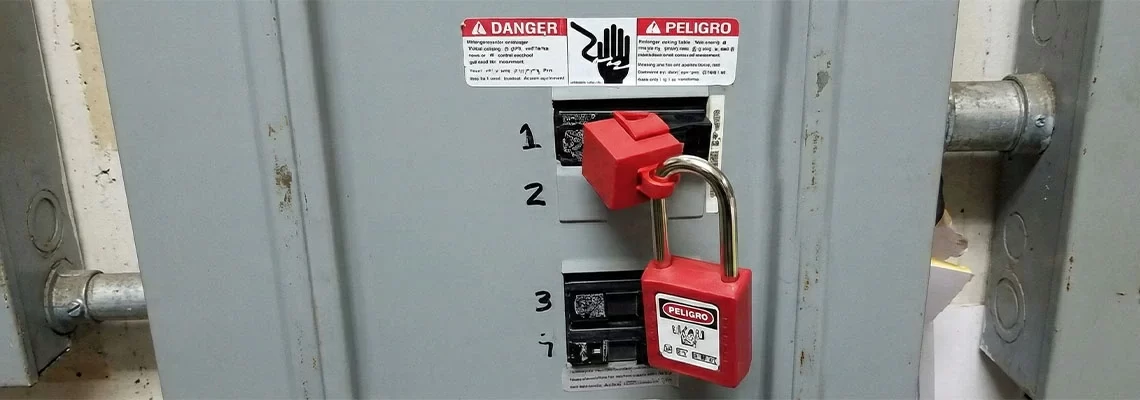
OSHA has not issued a final rule with any changes to the Lockout/Tagout (LOTO) standard (29 CFR 1910.147). However, it is considering updates based on a 2019 Request for Information (RFI) to address new technologies, specifically control circuit type devices and robotics. The core requirements of the existing rule remain in effect.
Background on the Review
It is estimated that the current LOTO standard, established in 1989, prevents approximately 120 fatalities and 50,000 injuries annually. In May 2019, OSHA issued an RFI to gather data and comments from employers on how to modernize the standard to reflect technological advancements without creating additional regulatory burdens. Challenges with new technologies include:
- Complex Energy Systems: Modern industrial robots have complex control systems that use electrical, pneumatic, and hydraulic power, and can have “stored energy” in components like capacitors.
- Autonomous and Collaborative Robots: These robots can move independently and adapt to their environment, making traditional LOTO difficult. The need to frequently test and reposition them can make the standard impractical to apply.
- Software and Calibration: Simply shutting down a system can cause it to lose its calibration, requiring complex and potentially risky procedures to restore its settings.
Key Areas of Consideration for OSHA
OSHA specifically sought information on two main areas:
- Control Circuit Type Devices: The current standard states that circuit type devices (e.g., control switches, push buttons) do not meet the accepted definition of Energy-Isolating Devices (EIDs) and require the use of traditional EIDs (like manual circuit breakers or valves). However, technological advances suggest that some modern control circuit devices might provide safety levels equivalent to EIDs under certain conditions. OSHA is exploring if these devices could be safely used, and under what circumstances. The types of control circuit devices under discussion as potentially acceptable include:
- Control-Reliable Circuitry: Systems that use approved components and redundant safety systems designed to prevent failure and provide an equivalent level of safety to traditional EIDs.
- Safety Control Circuit Systems: Advanced systems that can isolate specific sections or subsystems of interconnected production equipment, allowing maintenance in one area while others remain operational.
- Key-Controlled Locks and Interlocked Barrier Guards: These are already acceptable as alternative measures for minor servicing under specific conditions (the “minor servicing exception”), and OSHA is exploring whether their use can be expanded or integrated into a broader standard.
- Robotics: The increasing use of robotics, including collaborative robots and exoskeletons, presents new hazards regarding the control of hazardous energy. OSHA is investigating how the LOTO standard should be amended to address these new risks as well as the reliability of safeguards and industry best practices currently in use to as protection from malware or malfunctions.
Status of the Review
While the agency received numerous comments, as of Fall 2025, OSHA had not yet finalized any revisions to the standard. There was a previously proposed change to remove the word “unexpected” from the standard’s scope, but the agency ultimately decided not to finalize at that time but to consider further.
For now, employers must continue to comply with all existing requirements in the current OSHA Lockout/Tagout Standard (29 CFR 1910.147) which emphasizes:
- Developing and documenting an energy control program and specific procedures.
- Using lockout devices on equipment designed to be locked out or a tagout procedure for machinery that cannot be locked out.
- Providing effective training for all employees (authorized, affected, and other).
- Conducting periodic inspections of energy control procedures at least
Under the current OSHA Lockout/Tagout (LOTO) standard, devices such as push buttons and selector switches are explicitly excluded from the definition of energy-isolating devices (EIDs) and cannot be used as the sole means of deenergizing equipment for maintenance.
If you have questions or concerns regarding compliance to the Lockout/Tagout Standard (29 CFR 1910.147) please contact Novisal. We can review/audit your current program as well as provide the required employee training.