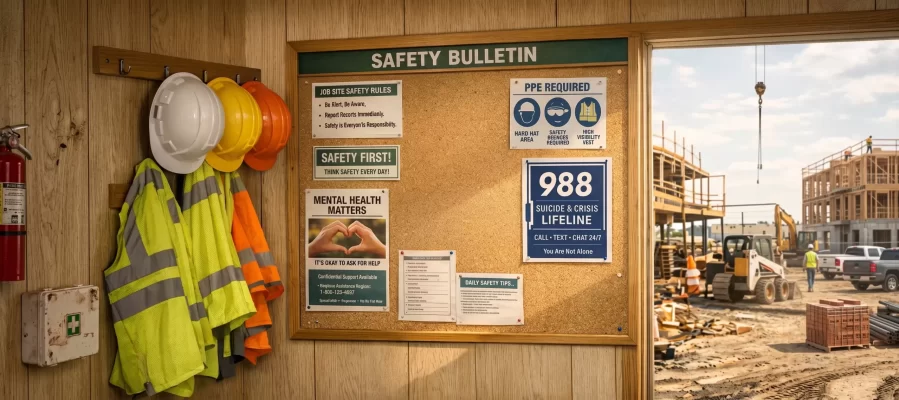
Safety on a construction site usually means hard hats, fall protection, and high-visibility vests. However, the Occupational Safety and Health Administration (OSHA) is actively sounding the alarm on a silent, deadly workplace hazard: suicide.
Because of the stark reality that the suicide rate in the construction industry is nearly four times higher than the national average, OSHA is helping the Trades shift how they view site safety holistically and is urging employers to treat mental strain with the same urgency as a physical trip hazard or faulty scaffolding.
The Hidden Pressures on Construction Crews
Effective protection of this workforce, it is essential to understand the unique industry stressors driving this mental health crisis:
- Chronic Pain and Injury: Severe physical labor leads to wear and tear. Workers often mask chronic pain with prescription opioids, creating a dangerous pathway to substance dependency.
- Boom-and-Bust Cycles: Seasonal layoffs, project delays, and erratic income cause severe, continuous financial anxiety.
- Isolation from Family: Projects often require traveling long distances. This keeps workers away from their families and primary support systems for weeks at a time.
- A Culture of “Toughness”: The male-dominated construction industry frequently promotes a stoic culture. Workers often hide their struggles because they fear being viewed as weak or unreliable by peers.
OSHA's Action Plan
- Treating Strain as a Hazard: OSHA encourages employers to integrate mental strain into routine Job Hazard Analyses and daily safety controls.
- Awareness Campaigns: OSHA heavily promotes annual initiatives like Construction Suicide Prevention Week to force open conversations around mental health.
- Providing Tools: The agency offers resources specifically for employers to use on job sites, such as OSHA Toolbox Talks and educational OSHA Suicide Prevention Posters.
- Direct Access to Resources: OSHA promotes the use of the three-digit 988 Suicide & Crisis Lifeline to make seeking help as fast and accessible as calling for a standard medical emergency.
Actionable Steps for Construction Employers
- Update Your Safety Meetings: Do not limit your daily or weekly huddles to physical hazards. Dedicate specific sessions to mental health. Use free, pre-made resources like OSHA Toolbox Talks to structure these conversations. Consistently speaking about mental health normalizes the topic and breaks down the workplace stigma.
- Integrate Mental Strain into Job Hazard Analyses (JHA): When planning a tight deadline or organizing high-stress, fast-paced project phases, evaluate your crew’s mental bandwidth. Factor in fatigue, mandatory overtime, and burnout just as you would factor in weather conditions or equipment failures.
- Build a Peer-to-Peer Network: Workers are far more likely to open up to a trusted peer on the crew than to an executive or an HR representative. Train your foremen and site leaders to recognize the early warning signs of distress, including:
- Uncharacteristic absenteeism or frequent tardiness
- Increased irritability or sudden friction with coworkers
- A noticeable drop in daily productivity
- Disregard for standard site safety protocols
- Provide Visual, Anonymous Lifelines: Display critical resource information in high-traffic areas like break trailers, porta-potties, and tool sheds. This allows struggling employees to get help privately. Hang official, industry-specific safety posters in common areas to keep mental health resources visible.
The Bottom Line
A safe job site is one where workers make it home safely at the end of the day—both physically and mentally. By actively addressing mental strain, your company can reduce absenteeism, improve overall job quality, and directly save lives.
The three-digit 988 Suicide & Crisis Lifeline is free, confidential, available 24/7, and can be reached via call or text.